
Fine-Tuning the Details
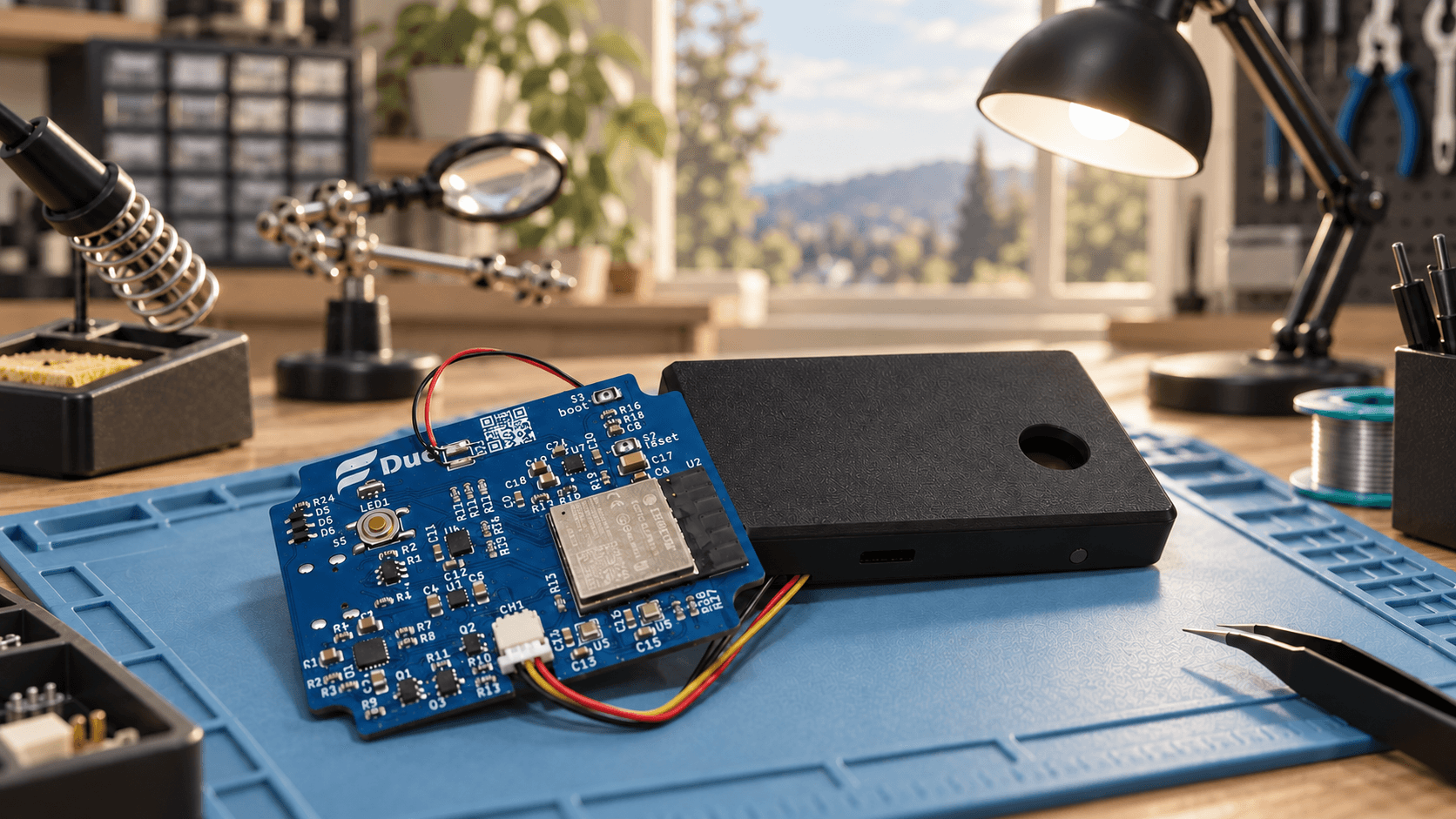
Our third FlySys Duo prototype looks very similar to the second. It is a small revision of that design, with the focus now on refining the details that matter in everyday use.
At this stage, the work is about power consumption, simplicity, and component choices. The buzzer and battery are part of that process: each has to suit the instrument as a whole.
Small refinements in the workshop shape how Duo feels in the air.
Making Better Use of the Battery
Reducing power consumption is one of our priorities. We want Duo to make better use of the energy it carries, so improving battery life means looking at how that energy is used as well as choosing the battery itself.
The right battery is a balance between capacity, size and weight. We are refining that choice alongside power consumption, with the aim of keeping the instrument compact and practical for flying.
A More Compact BLE Module
We have also changed the BLE module, moving from a version with an external antenna to one with an integrated antenna.
In our revised design, this change helps reduce energy consumption and saves space. Together with the other power improvements, it allows us to use a smaller battery and a smaller PCB, bringing the electronics into a more compact package.
Choosing the Right Buzzer
Sound is central to an audio variometer. Choosing the buzzer is therefore an important part of this revision, rather than a detail to leave until the end.
We are looking for the right balance of audible feedback, power consumption and physical fit. The buzzer, enclosure and battery need to work together, so these choices belong to the same fine-tuning process.
Four Volume Levels
We have also added a volume setting with four levels, so the sound can be adjusted to suit the pilot. Level 0 mutes the audio, while levels 1, 2 and 3 correspond to 50%, 75% and 100% volume.
| Level | Volume |
|---|---|
| 0 | 0% (muted) |
| 1 | 50% |
| 2 | 75% |
| 3 | 100% |
Three Indicators Become One RGB LED
One concrete change from the second prototype is the LED indication. We have replaced three separate indicator lights with a single RGB LED.
This brings the light indication into one place, using colour instead of separate lights. It is a small hardware revision that fits the broader aim of making Duo simpler to use.
Keeping It Simple
Alongside the hardware decisions, we are focusing on simplicity. The aim is straightforward operation, with less attention spent on the instrument and more on the flight.
That is what this prototype represents: a familiar design being refined through smaller decisions. Better use of battery power, the right components and simple operation all contribute to the same goal—a practical instrument that is easy to live with.