
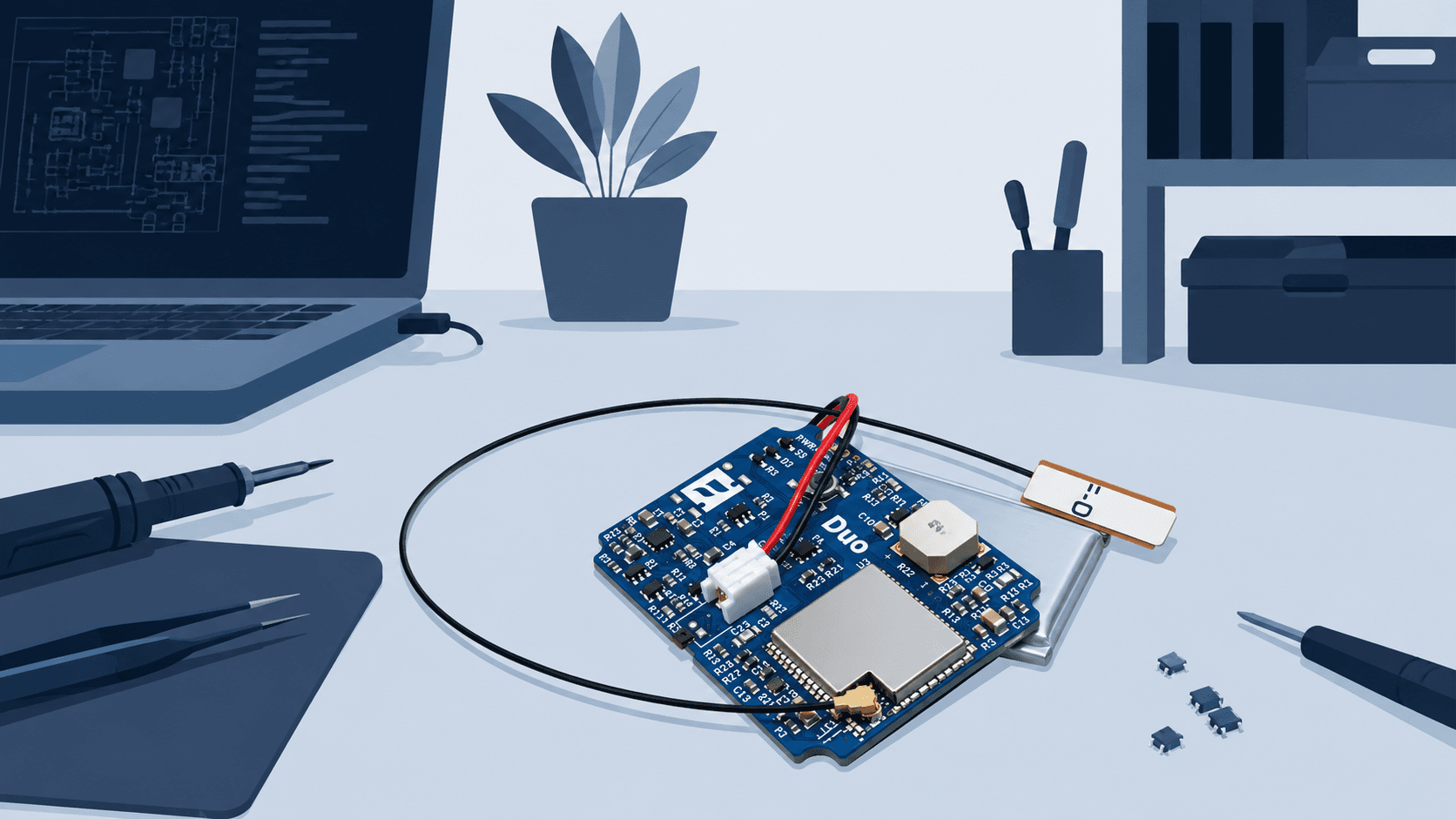
From Separate Parts to Duo
A circuit on a workbench can prove that an individual idea works. A complete prototype has to prove that all those ideas can work together. In July 2026, the first integrated prototype of the FlySys Duo reached that point.
It brings together two barometric pressure sensors, an inertial measurement unit, our vertical-speed algorithms, audio feedback, Bluetooth Low Energy, battery operation, and the physical controls a pilot uses in the field.
This is the first Duo we can test as a complete flight instrument, not just as a collection of promising components.
The Dual-Barometer Setup Delivered Excellent Results
Pressure is the foundation of a variometer's altitude and vertical movement estimate. Duo measures the same atmosphere with two independent barometers and averages their readings when both are healthy. We measured exactly what that contributes to the pressure signal.
The second barometer also adds resilience. Duo can compare the two readings, detect disagreement, and continue with the healthy sensor if the other becomes unavailable. The result is a cleaner pressure input during normal operation and a dependable fallback when a sensor cannot be used.
What the Prototype Lets Us Validate
The prototype is where measurements meet real use. We can examine how quickly the instrument responds, whether the tone remains stable, how the two pressure sensors agree, and how reliably data reaches the mobile application.
It also exposes interactions that isolated bench tests cannot: the effect of wireless activity on power consumption, the behaviour of the device during charging, the visibility of its indicators, and the way the enclosure influences everyday operation.
Each test produces something concrete to improve. Some changes are algorithmic, some belong in firmware or the mobile application, and others influence the next hardware revision.
A Prototype, Not the Finish Line
Reaching the first complete Duo is an important milestone, but it is not a finished production device. Calibration, repeated flights, power measurements, fault testing, and feedback from pilots still have to challenge every assumption we made at the workbench.
That process is exactly why the prototype exists. It turns the project from something we believe should work into something we can measure, fly, refine, and eventually trust.